
Revealing Argyll’s Underwater Meadows: A Story of Loss and Renewal
Beneath the calm waters of Argyll’s sea lochs lies one of Scotland’s most important, and least visible, ecosystems: seagrass meadows. These flowering plants form underwater forests that support fish, protect coastlines, and store carbon for thousands of years.
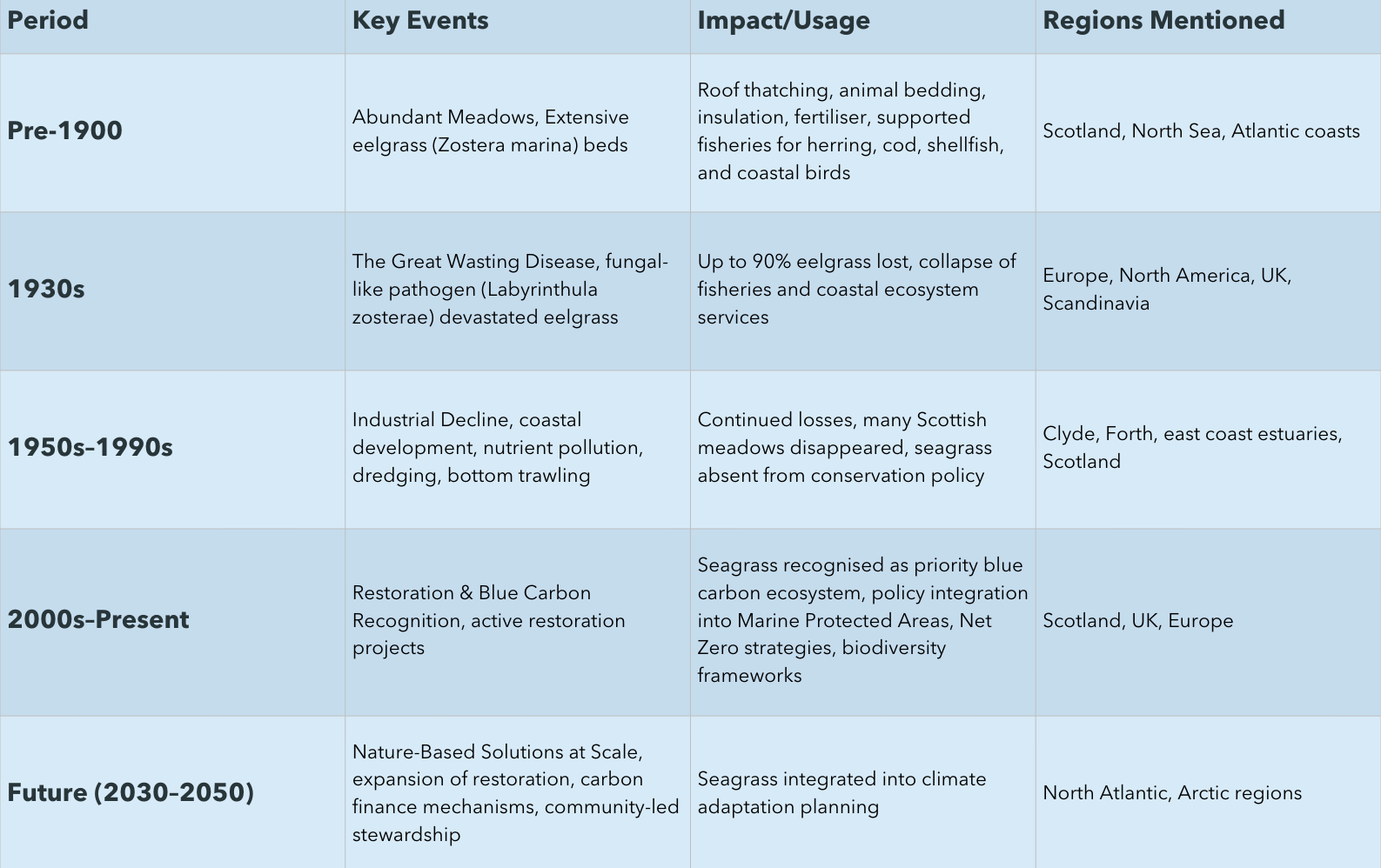
For centuries, eelgrass (Zostera marina) was abundant along Argyll’s shores. Coastal communities used it for thatching roofs, animal bedding, and fertiliser. But in the 1930s, a wasting disease swept across the North Atlantic, devastating meadows across Europe and Scotland. Industrial pressures, dredging, anchoring, and pollution further reduced seagrass through the 20th century.
Today, Argyll’s sheltered lochs—such as Loch Sween, Loch Craignish, and the Sound of Jura—still hold some of Scotland’s most intact seagrass habitats. Dive surveys reveal pipefish, juvenile fish, starfish, and eels among the blades, showing these meadows remain vital nurseries for marine life.
Seagrass is also a powerful climate ally. By trapping carbon in sediments, these meadows act as long-term carbon sinks and help stabilise shorelines against storms and erosion. Scientists now recognise seagrass as a key nature-based solution for climate change.
Restoration efforts are growing across Scotland, with communities and scientists mapping meadows, trialling restoration, and exploring community stewardship of the seabed. For Argyll, seagrass offers a rare opportunity: to restore nature, strengthen coastal resilience, and create sustainable livelihoods through the fish and shellfish that depend on these underwater nurseries. Within these meadows, juvenile fish and crabs find shelter and food, spending their early years in a habitat that dramatically boosts the strength and abundance of commercially important stocks.
Argyll’s underwater seagrass world is now reduced to scattered, isolated meadows that need restoration so they can once again form the rich habitat mosaic that has long connected centuries of coastal heritage with a nature‑positive future. A recent survey of one of these exceptional, undisturbed seagrass meadows was conducted by the Highlands Rewilding marine team, and the details of this assessment are presented below.
Highlands Rewilding exploring a remote Seagrass Haven on Scotland’s West Coast
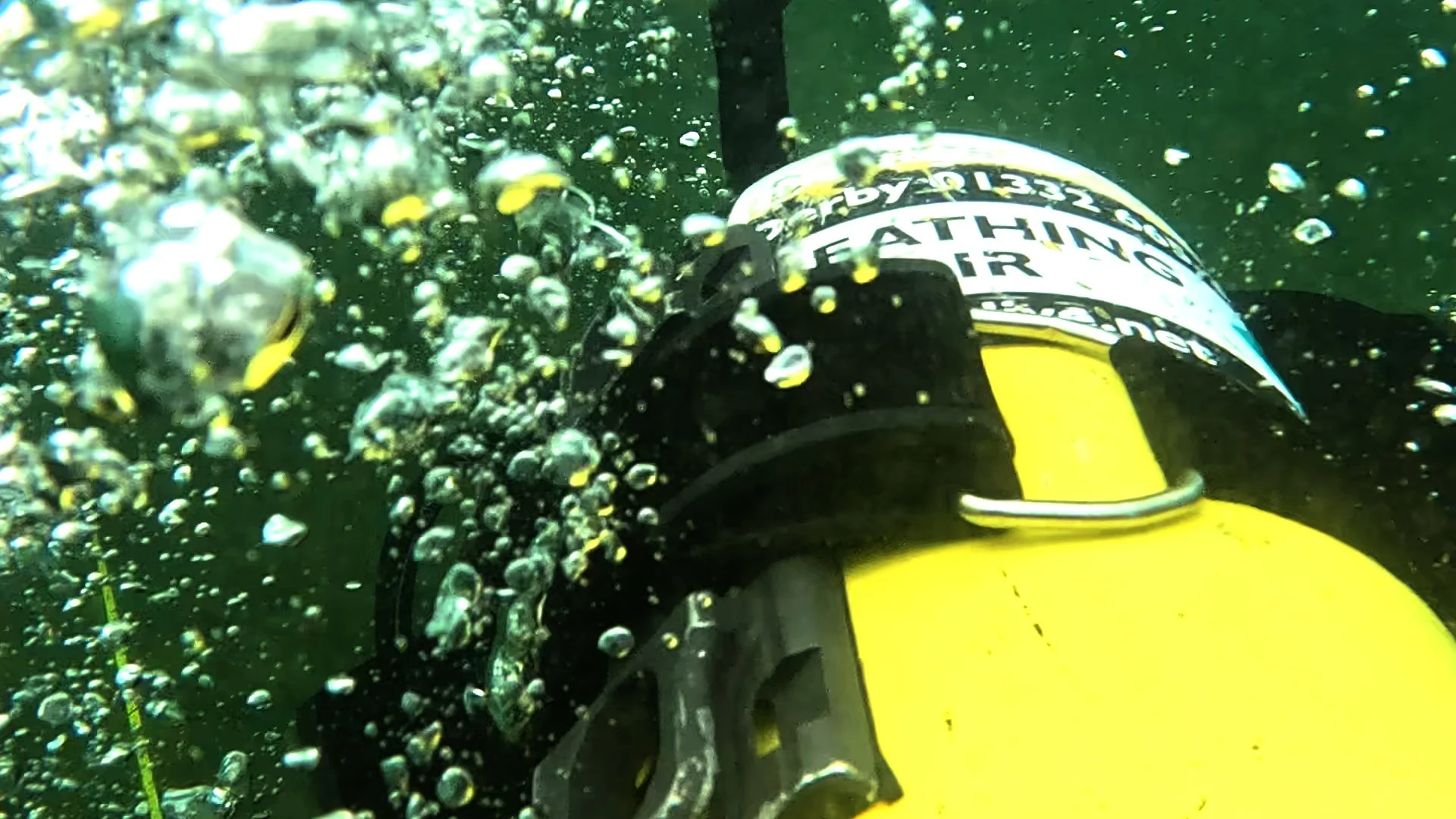
It’s a warm, sunny afternoon in July, and the Highlands Rewilding marine team is preparing to dive into the calm waters of Linne Mhurrich a semi-enclosed embayment within Loch Sween on Scotland’s west coast. Joining them is Rebekha Baijo, a marine taxonomist from Queen’s University Belfast, specialising in species associated with seagrass habitats.
The dive has a clear purpose. Following conversations with independent seagrass scientists and Project Seagrass Scotland, key questions had emerged: How large is the Linne Mhurrich seagrass meadow? And does it host unique species found nowhere else?
To find out, Rebekha led a biodiversity survey while the Highlands Rewilding team assessed the meadow’s condition and mapped its extent.
A Hidden World Beneath the Waves
Remote, semi-enclosed sea lochs like Linne Mhurrich often host species that have adapted to very specific environmental conditions. Sheltered from the open ocean, these lochs can act as natural laboratories where unique communities develop in response to local currents, nutrients, and light levels.
As the team entered the water, the scene felt unexpectedly tropical. Sunlight filtered through the surface, dancing across pale sands, while streams of tiny oxygen bubbles shimmered along the long, green blades of seagrass. For a moment, it felt less like Scotland and more like a Caribbean lagoon or a bay in the Arabian Gulf.
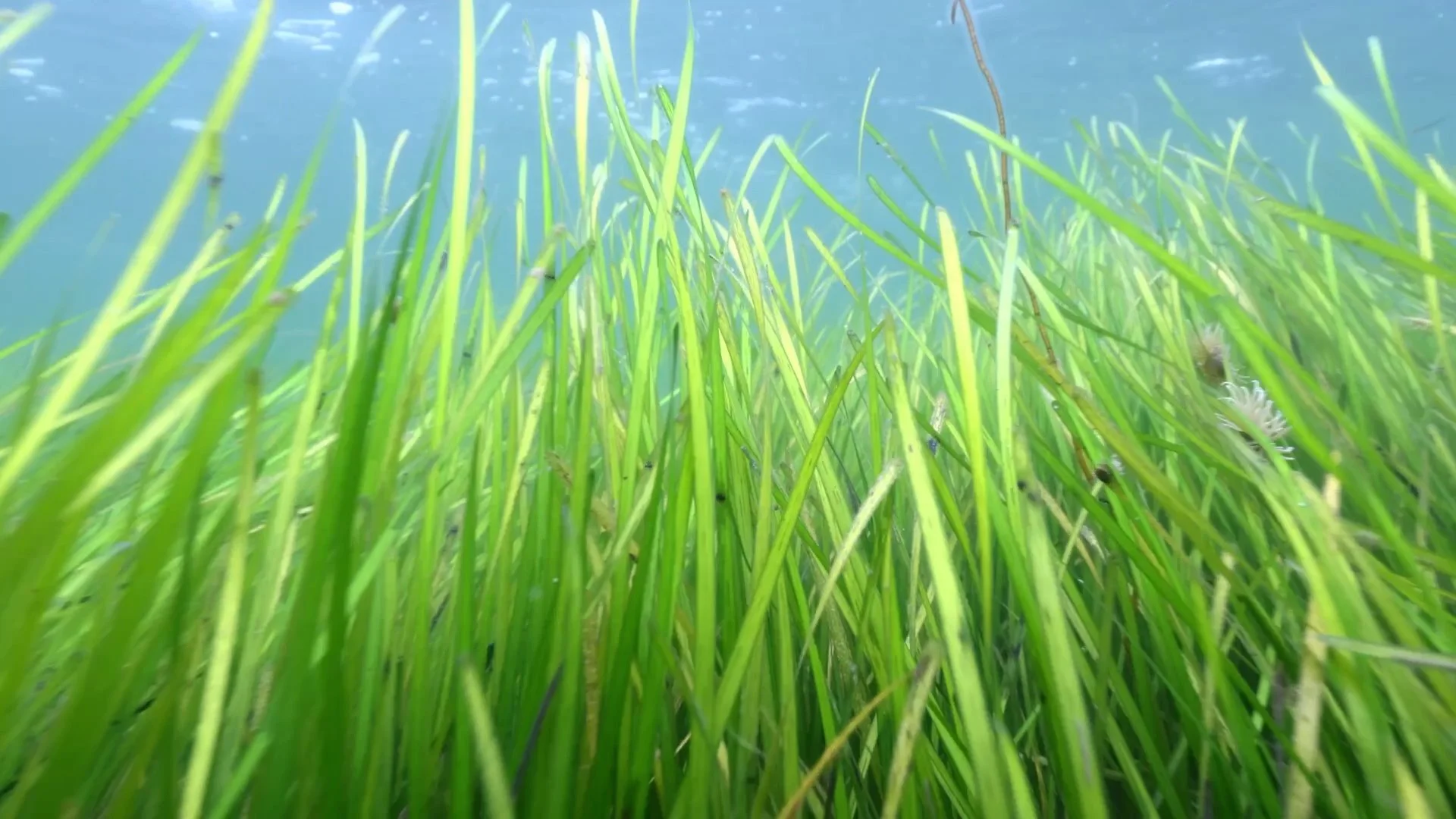
A seagrass meadow from below. Credit: Seawilding.
Why Seagrass Matters
Seagrass is often mistaken for seaweed, but it is actually a flowering plant, closer to grassland plants than algae. It needs sunlight, carbon dioxide, and water to grow, and through photosynthesis it produces carbohydrates and releases oxygen into the surrounding water.
This is why seagrass is sometimes called “the lungs of the sea.”
A single square metre of seagrass can produce around 10 litres of oxygen per day, and a hectare can generate up to 100,000 litres daily.
But oxygen production is just the beginning. Seagrass meadows:
Provide nursery habitat for fish and commercially important crustaceans
Improve water quality by trapping sediments and nutrients
Stabilise the seabed, protecting coastlines from erosion, storms, and flooding
Support extraordinary biodiversity, from tiny invertebrates to larger fish and marine mammals
A Carbon Storehouse
In recent years, seagrass has gained global attention for its role in tackling climate change. These meadows are one of the planet’s most effective blue carbon ecosystems.
Seagrass absorbs carbon to build its leaves and roots. When plants die, their material becomes buried in sediments along with organic matter from other organisms. Over time, this creates thick layers of carbon-rich sediment that can store carbon for thousands of years, provided the seabed remains undisturbed.
Despite covering less than 0.2% of the ocean floor, seagrass is responsible for around 10% of the ocean’s total carbon burial and can capture carbon up to 35 times faster than tropical rainforests.
It’s not hard to see why scientists consider seagrass one of our most powerful natural solutions to the climate crisis.
Surveying the Linne Mhurrich Meadow
After two hours underwater, the team completed an initial boundary survey of the Linne Mhurrich meadow, mapping a perimeter of approximately 1,800 metres. Random transects were then conducted to assess patchiness—areas where seagrass is sparse or absent.
The meadow was teeming with life. Shoals of juvenile fish darted between the blades, crustaceans and starfish dotted the seabed, and a common eel glided silently through the grass, hunting among the stems.
The highlight of the dive was a pipefish, perfectly camouflaged to resemble a seagrass blade. Not only did it match the colour of the plants, but it also mimicked their gentle swaying motion in the current—a master of disguise in its underwater forest.
A Meadow Bursting with Life
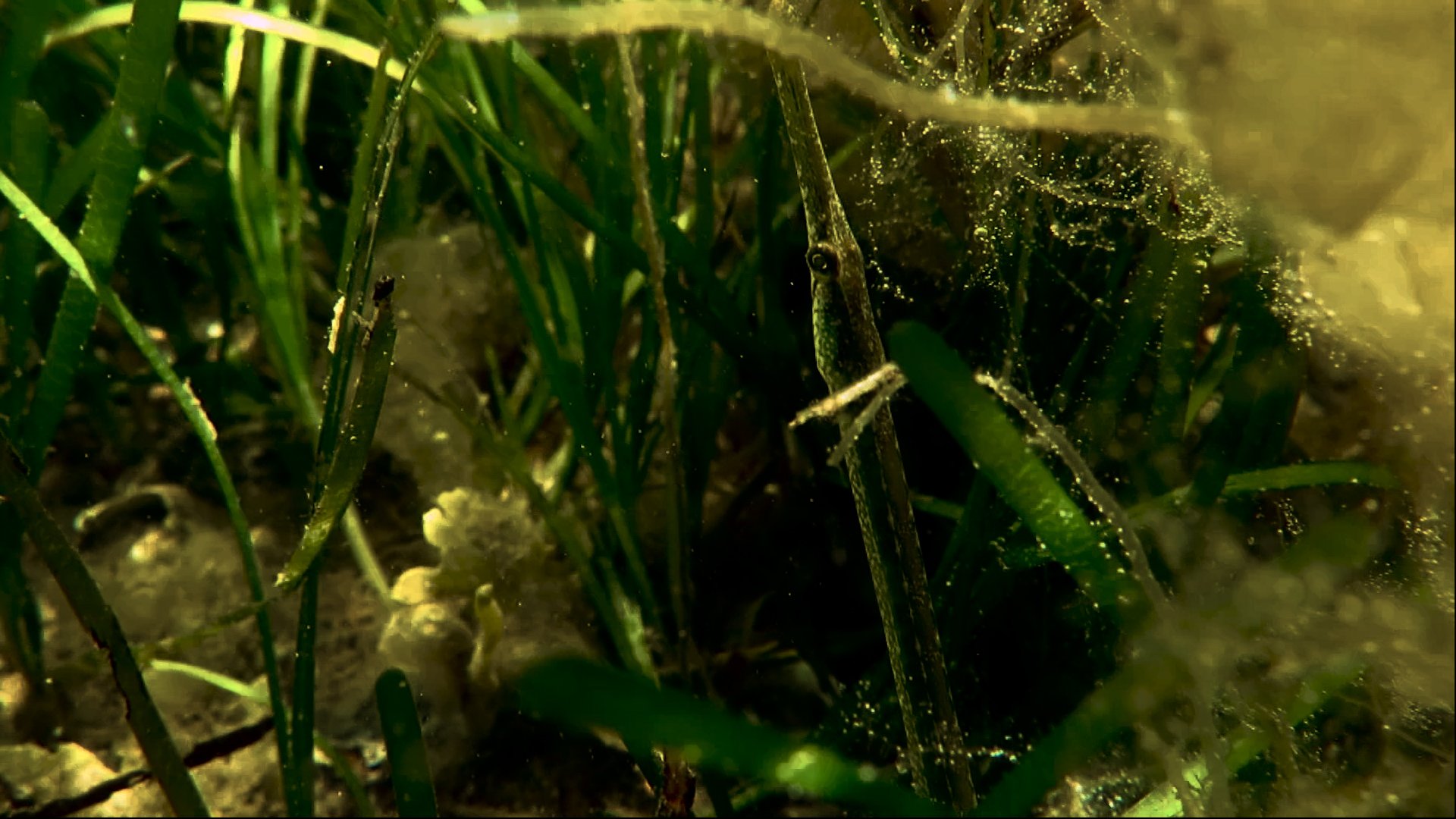
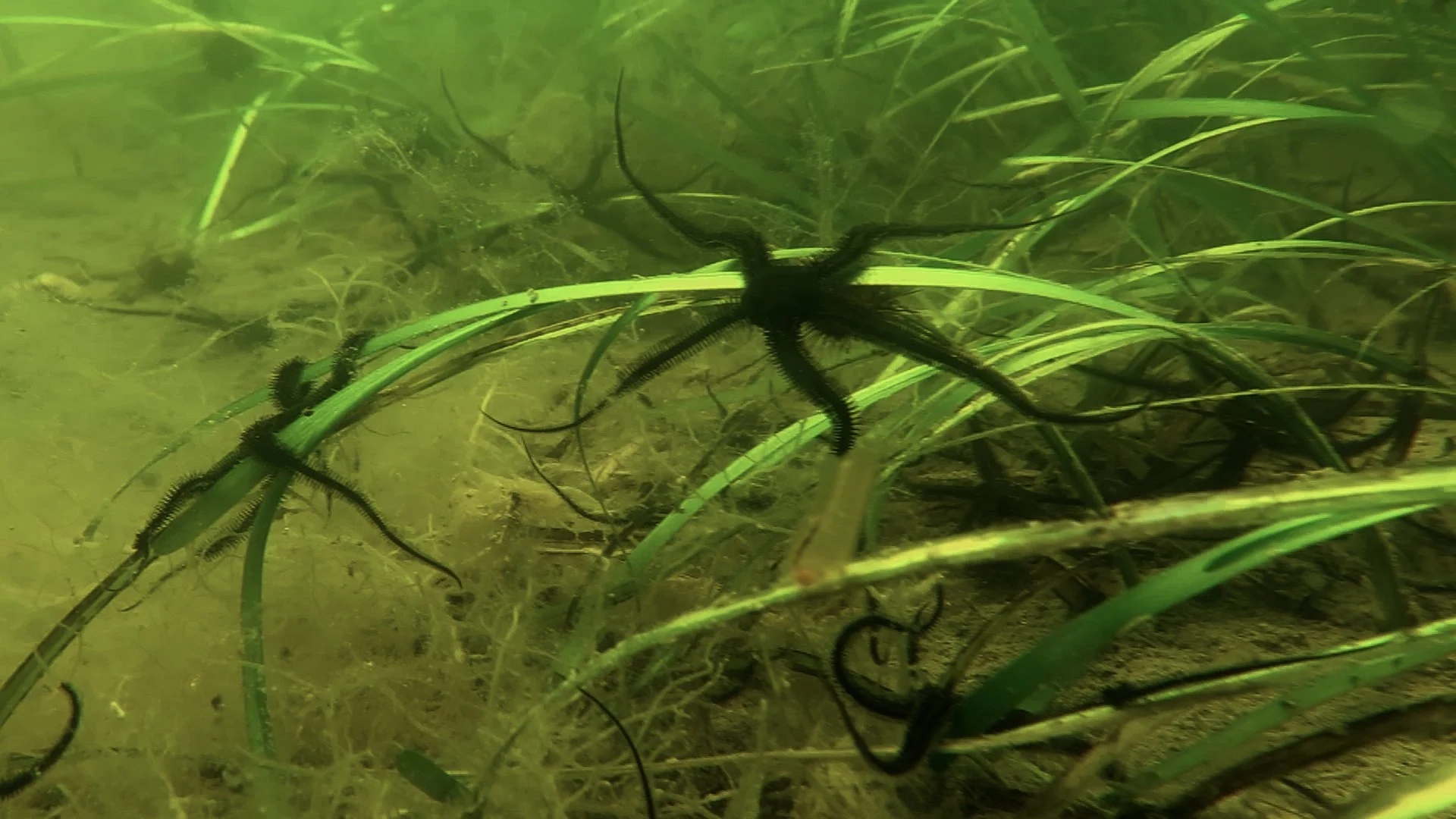
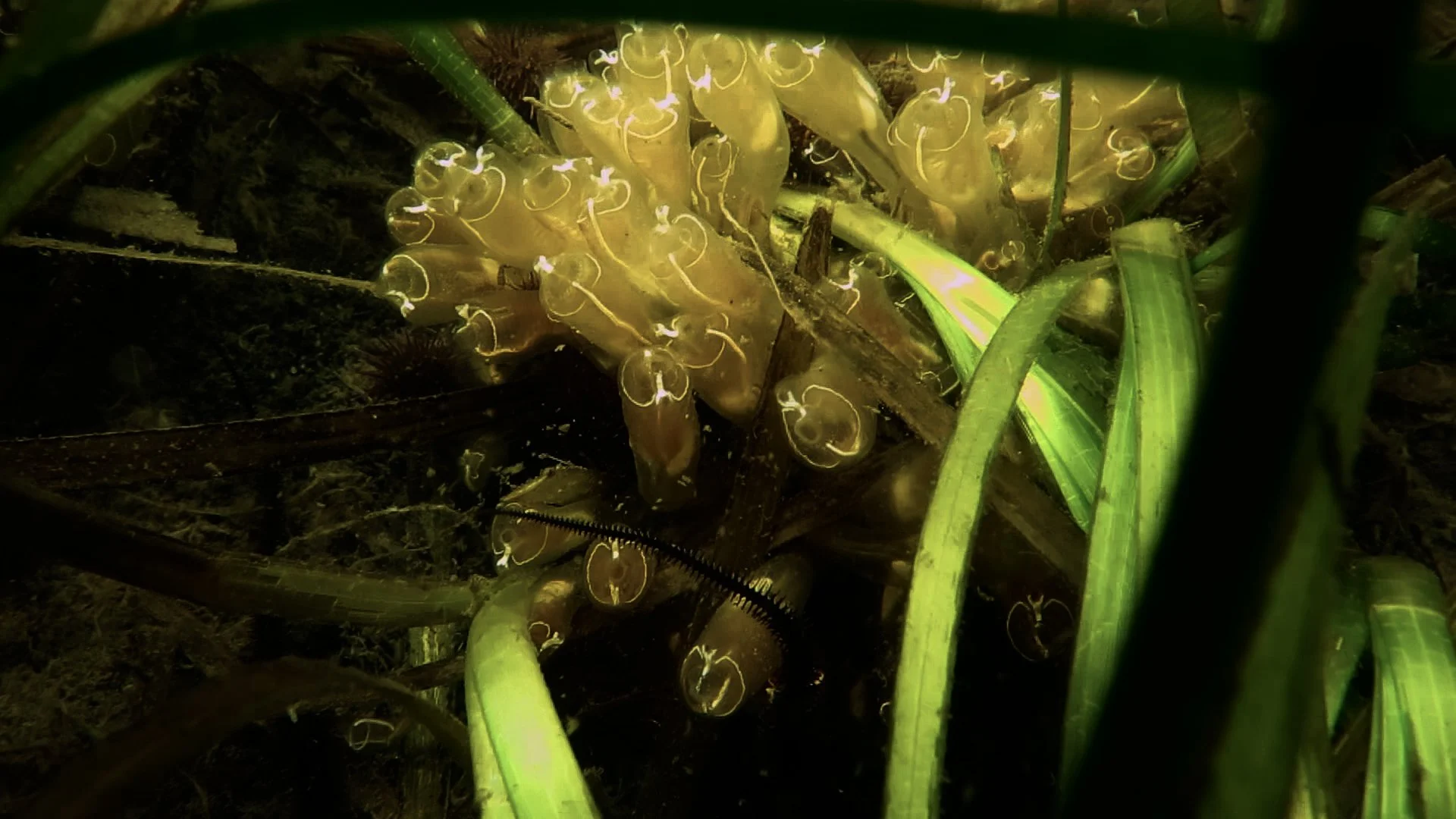
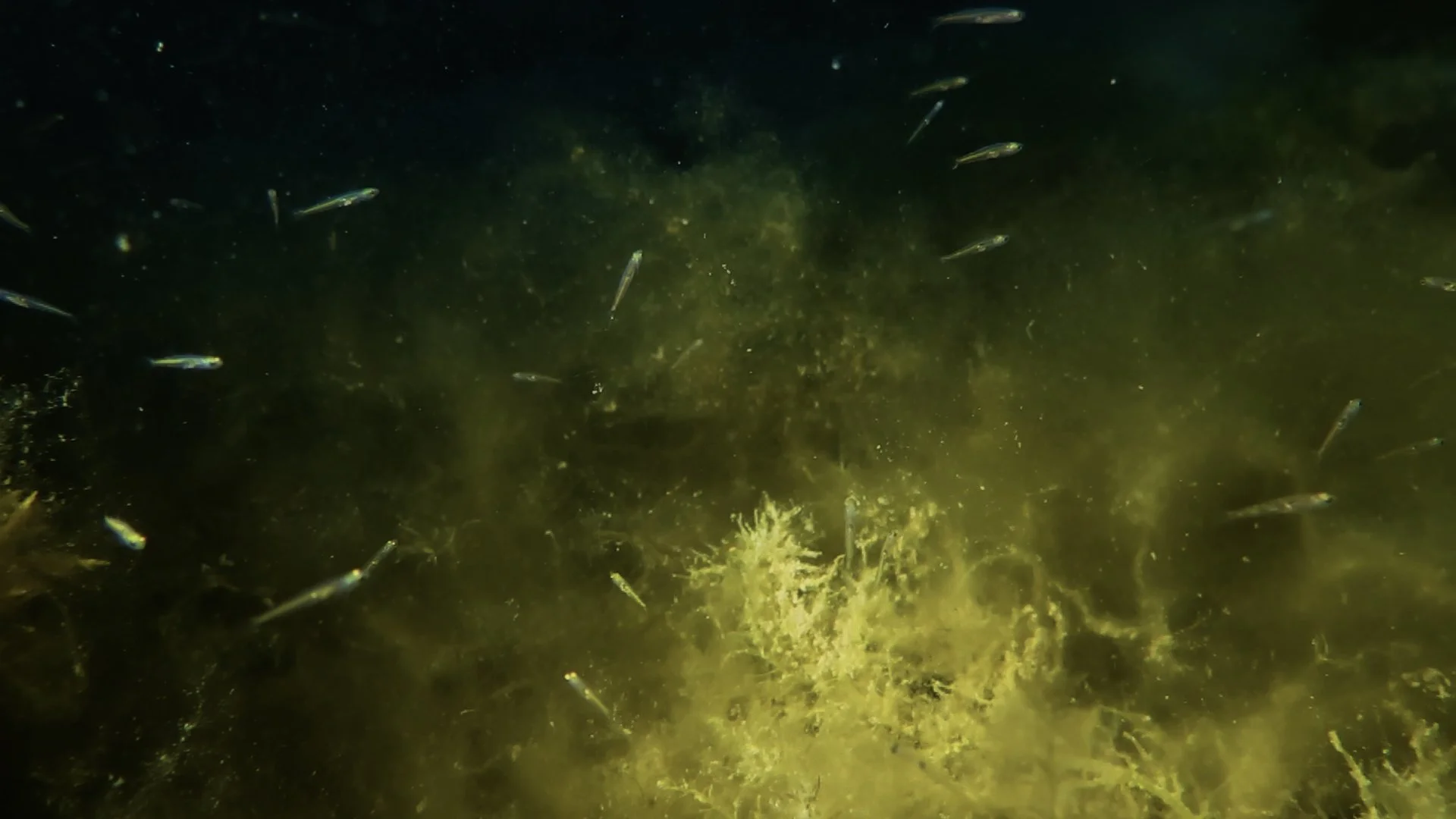
Photos taken during the Linne Mhurrich surveys
Back on the surface, as the team packed away their dive gear, Rebekha reflected on what she had seen:
“It’s one of the largest meadows I’ve surveyed, and it’s bursting with life.”
She identified and catalogued over 30 species, with photographic records, and believes many more remain to be documented. The Linne Mhurrich meadow is clearly a biodiversity hotspot, with much still to discover beneath its swaying blades.
The up-and-coming summer dives of 2026 will continue to explore the meadow’s biodiversity and health. Seagrass meadows like Linne Mhurrich are often out of sight, but their importance cannot be overstated. They are carbon sinks, fish nurseries, coastal protectors, and living archives of ecological history.
By diving beneath the surface, we are uncovering a hidden world, and building the knowledge needed to safeguard Scotland’s underwater meadows for generations to come.
Key events in seagrass habitat history across Europe and Scotland
References
Duarte, C. M., et al. (2013). The role of coastal plant communities for climate change mitigation. Nature Climate Change.
European Environment Agency (2020). State of Europe’s Seas.
HELCOM (Baltic) and OSPAR (North-East Atlantic) assessments on eelgrass decline and recovery.
McLeod, E., et al. (2011). A blueprint for blue carbon. Frontiers in Ecology and the Environment.
NatureScot (2022). Scotland’s Blue Carbon: A Review of Habitats and Policy Opportunities.
Orth, R. J., et al. (2006). A global crisis for seagrass ecosystems. BioScience, 56(12).
Project Seagrass UK (2021). UK Seagrass Restoration Handbook.
Short, F. T., et al. (1987). Eelgrass wasting disease: cause and recurrence. Marine Ecology Progress Series.
UK Blue Carbon Evidence Partnership (2020–2023). UK Blue Carbon Evidence Needs and Priorities.
Waycott, M., et al. (2009). Accelerating loss of seagrasses across the globe. PNAS, 106(30).