
Gorse, or whin, (Ulex europaeus), is one of the most abundant plants on Bunloit estate. You’re likely to see some from almost any open ground at this time of year, in bright patches, lines or even whole hillsides of yellow. The earliest satellite images we’ve seen of Bunloit, from summer 1997, show the same yellow flush, prominent even in that old, distant image.
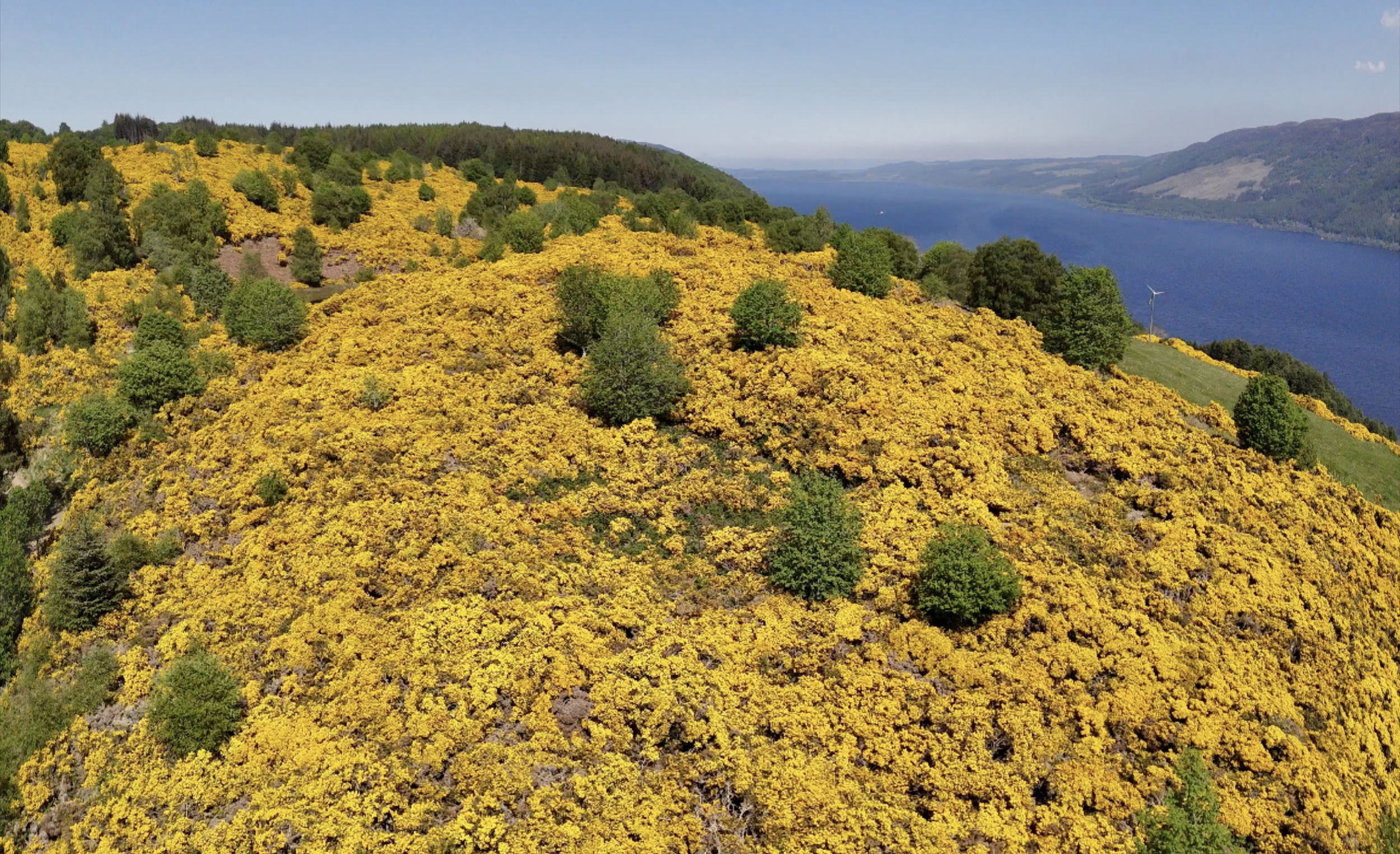
South Bunloit dense gorse May 2025
Gorse isn’t just important in Bunloit’s history. It’s a native leguminous shrub that grows widely across the UK and the Atlantic coast of Europe – as well as being a widespread invasive species in other parts of the world. It adds nitrogen to the soil and provides valuable habitat and food for insects and birds. Naturally it’s often a precursor to woodland, encouraging birds that deposit seeds and protecting the resulting saplings from browsing.
We’ve noticed all of these benefits on Bunloit. The many trees that have grown up through the gorse stand out clearly against the flowers in summer or, as many are Rowans, when the berries are ripe in autumn. These trees have started to shade the gorse out in places; another part of natural succession into woodland. In our baseline surveys on Bunloit, the largest gorse patch had the second highest diversity of insects with 128 recorded species. These included many flies that specialise on deadwood, some nectivores of shaded woodland floors, soldier flies of damp areas and hoverflies and moths of tall scrub. We also found invertebrate ground-dwelling predators of tall sward and scrub, as well as a few leaf litter species.
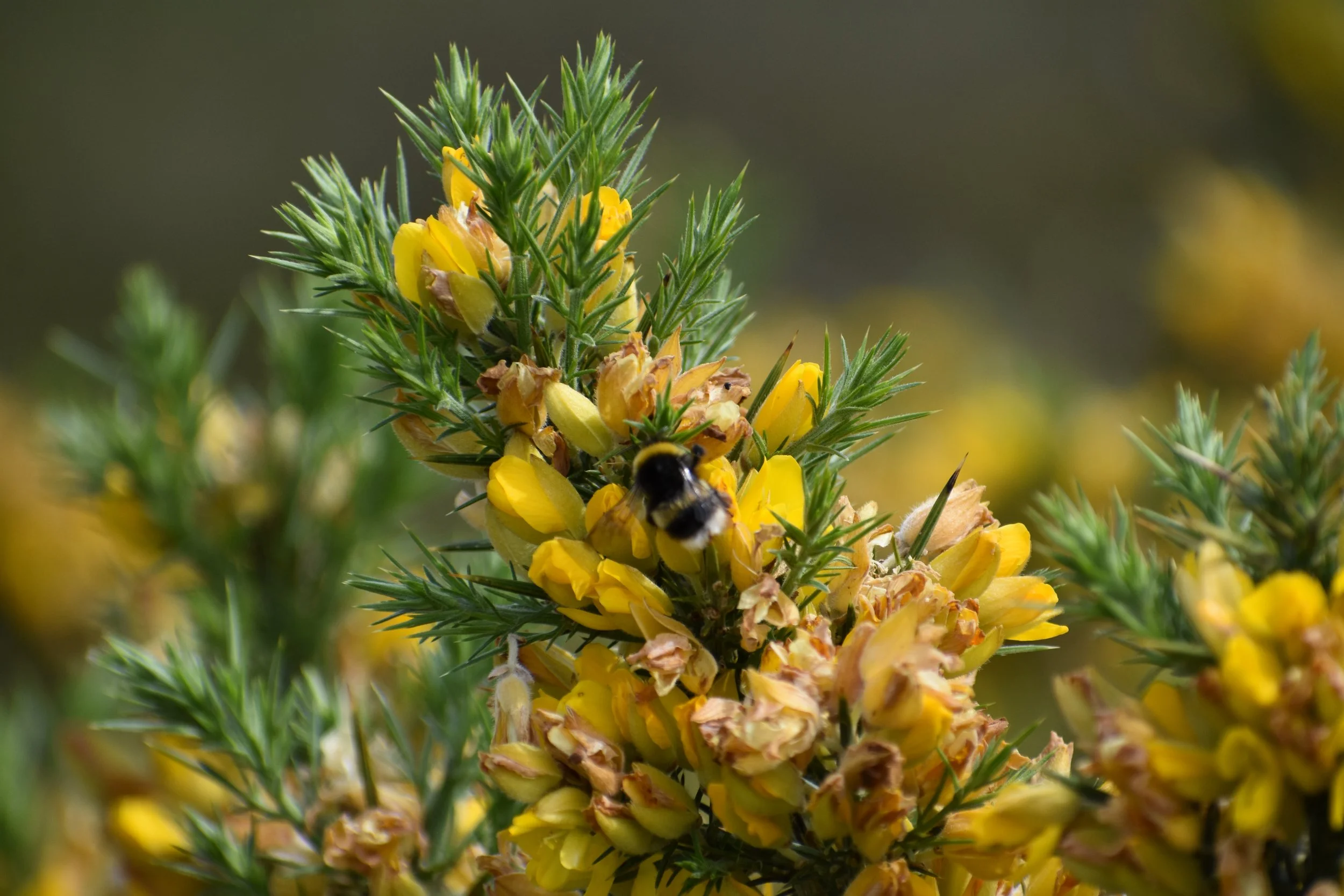
Bee on gorse Bunloit
Unfortunately, gorse has some downsides too. As well as being able to colonise new areas rapidly at the expense of other plants, it burns extremely well. This has become more of a concern in recent years as the risk of wildfires increases, underlined by a small gorse fire we had three years ago on Bunloit (on that occasion quickly contained). The largest single patch on the estate is around 18 hectares; the same patch we can see on old satellite images. As this area continues its gradual decades-long transition to woodland, the fire risk is getting higher every year.
Last year, we decided that on balance it would be best to remove this area of gorse and, with planting, speed up its change to native woodland. The decision wasn’t straightforward and neither was the approach. The ‘standard’ and least-cost method of clearing all the vegetation with heavy machinery, using glyphosate to prevent rapid regrowth and planting trees in plastic tubes would clearly have had too great an impact, but the light-touch alternative of planting trees individually in the gorse to speed up the process would have been difficult and costly without addressing the fire risk in the short-term.
So, earlier this year, we started clearing the gorse with a small, manoeuvrable mulcher that could avoid existing trees. Tree planters followed, putting in saplings of local provenance with species mixes varying with conditions across the site – Scots pine to link up with neighbouring stands on the higher ground, alders in wetter areas, oaks down towards Bunloit’s existing ancient oak woods. Mulch mats made of sheep’s wool were placed around each tree to hold back competing vegetation and retain some moisture. To protect the trees from the large local population of non-native Sika deer, a deer fence is being built around the perimeter.
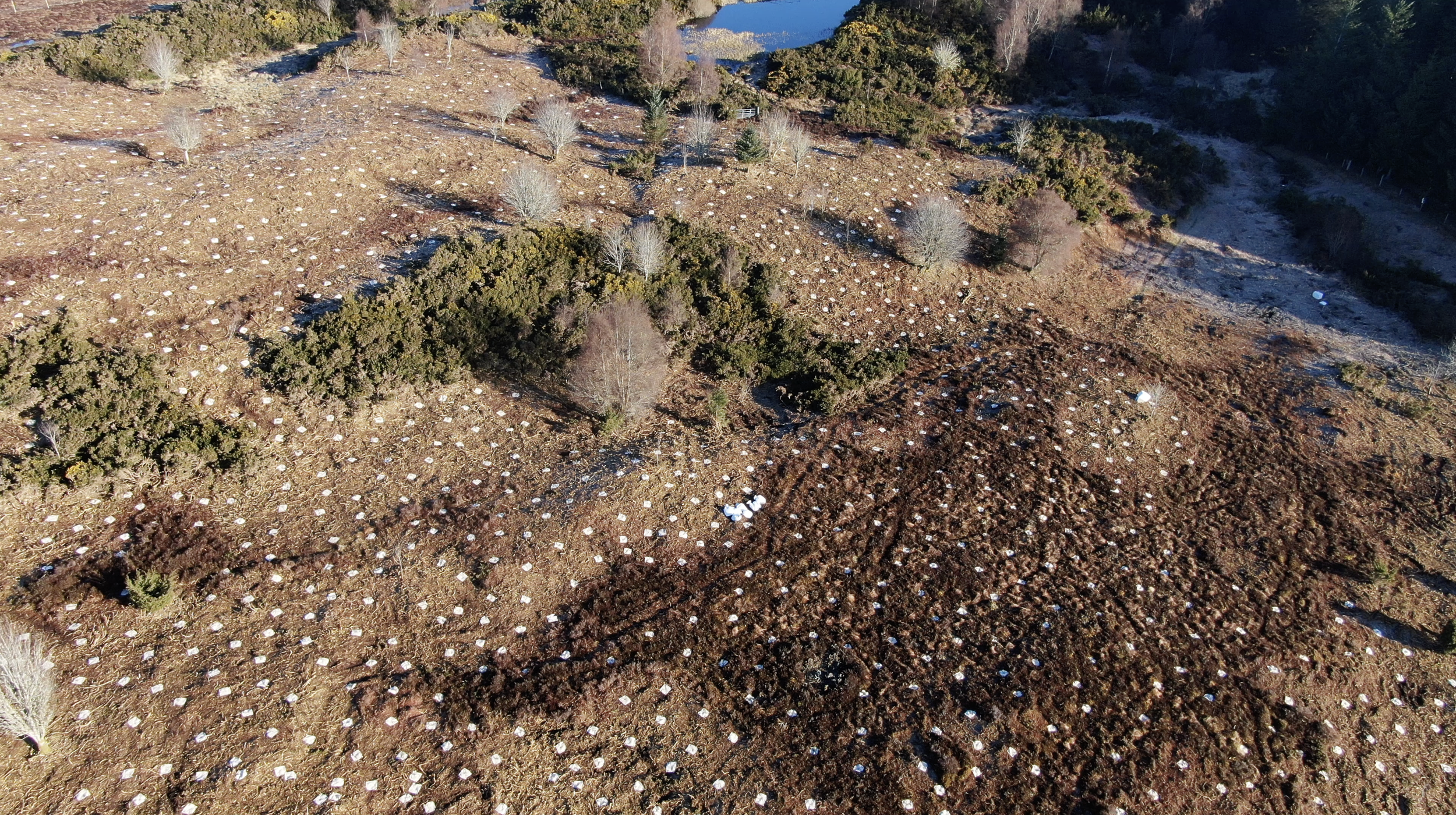
Aerial of mulch mats and saplings
This work was finished in just under half of the planned area by the start of spring, and is now paused until the autumn to allow the remaining gorse to act as nursery and home for the species that use it in the summer months. Large but more scattered areas of gorse will still remain on Bunloit after the project is complete, providing its many benefits but hopefully without its main, destructive drawback.
The other challenge in this work was funding. Grants for woodland creation cover something less than half the cost of a relatively slow and careful approach like this. In this case, we registered the new trees for the Woodland Carbon Code, giving us the opportunity to sell carbon credits representing the additional sequestration by the trees. When we sell these credits, we’ll need to not only work with a suitable buyer who meets the conditions of our buyer’s charter, but also to account for the carbon lost in clearing the gorse and associated work. Perhaps the biggest uncertainty in this relates to the gorse itself – there are no robust UK figures for the carbon stored in Gorse, and we suspect that existing estimates are too low, meaning that the carbon gained by conversion to woodland may be overestimated. We’ve been taking samples from across the site to find a more robust value by drying and weighing known volumes of gorse, and using these to work out their carbon content.
Eventually we’ll have a good picture of the ecological and carbon impacts of this project, as well as those where we haven’t intervened in this way. Those outcomes might make future decisions of this kind easier, but the likelihood is that we’ll be faced with more, not fewer, difficult choices about when and how to help ecosystems adapt to rapidly changing conditions.
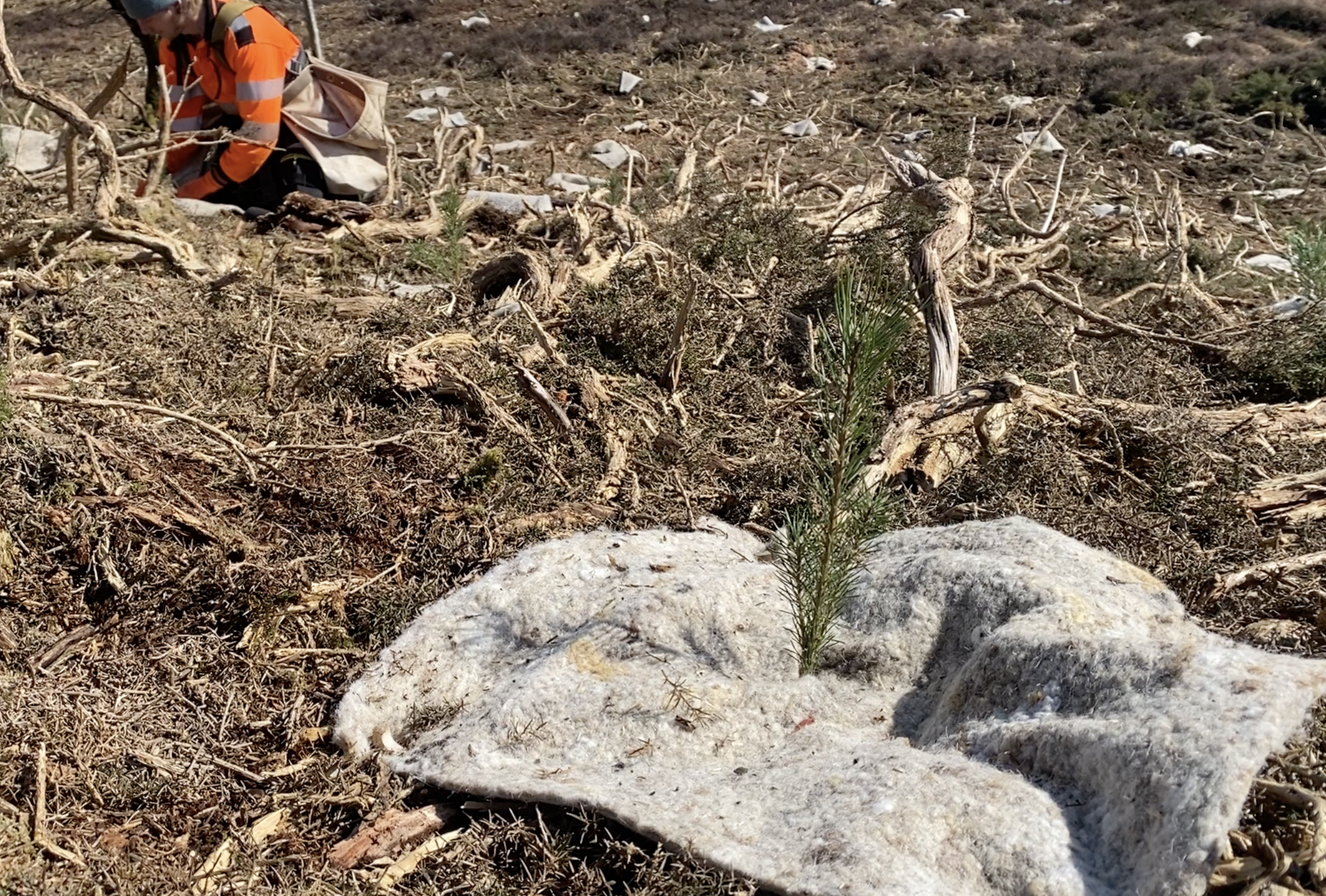
Mulch mats made of sheep’s wool